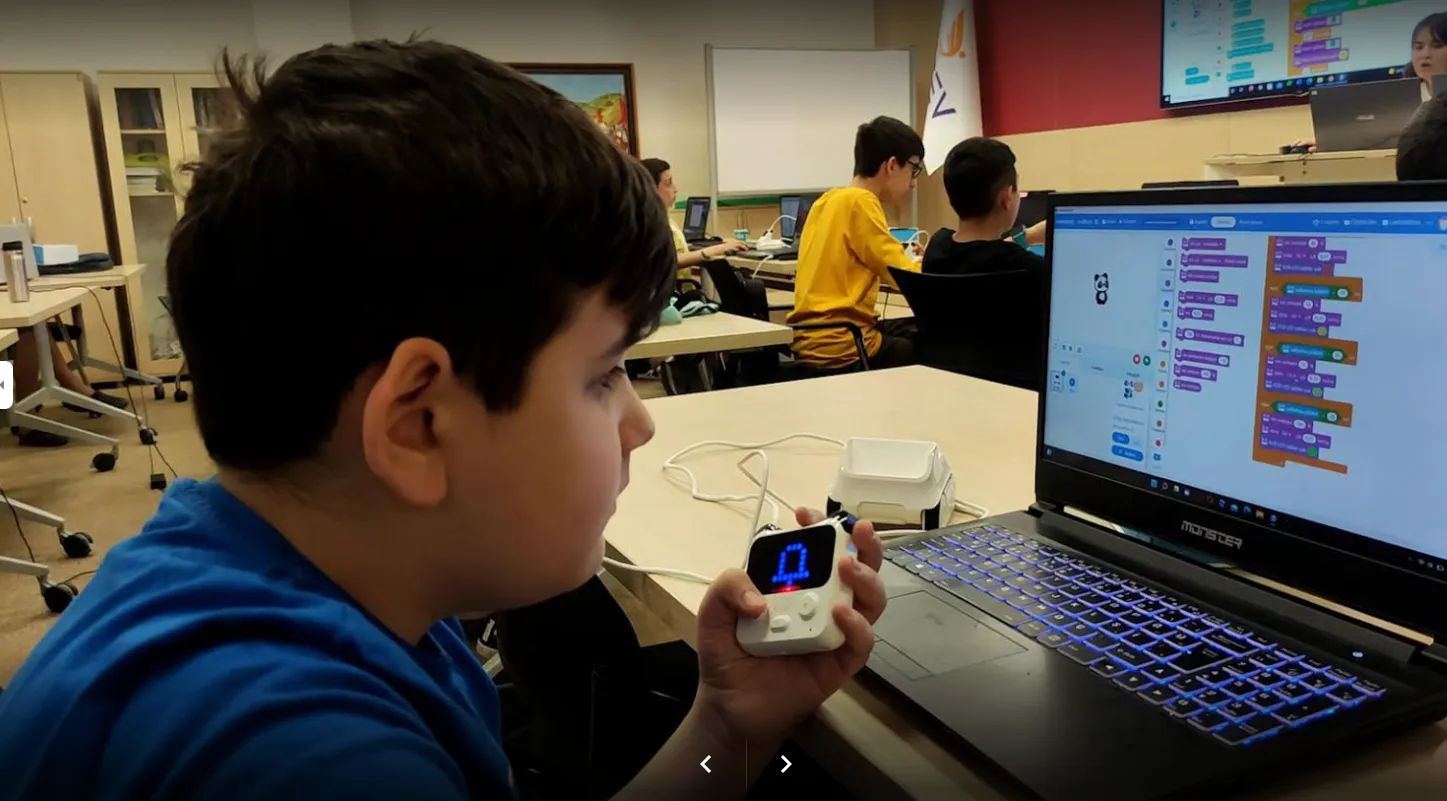

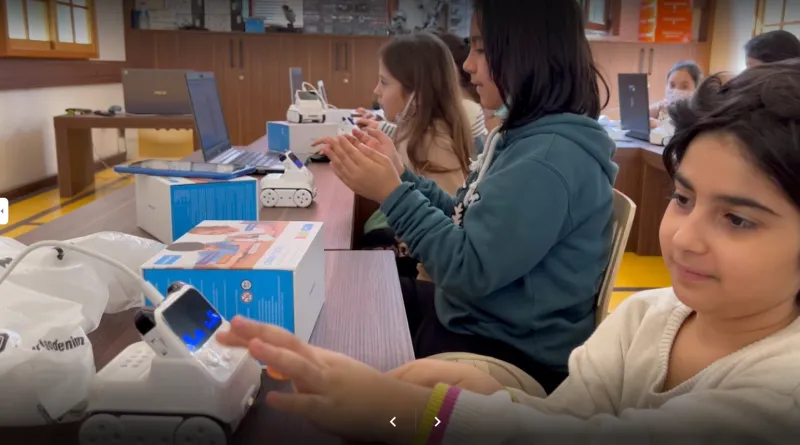
At TACEV, we offer a 24-week Block-Based Coding course specially designed for each age group. The course is delivered using the Codey Rocky educational robot and Makeblock's user-friendly mBlock interface.
During the course, students learn basic coding concepts and logic while also developing their ability to produce original and analytical solutions to problems.
The Codey Rocky educational robot, which our institution sends free of charge to students who successfully complete the Basic Algorithms course for use throughout their training, shows students how they can interact with robotics and smart devices and brings them closer to the world of technology.
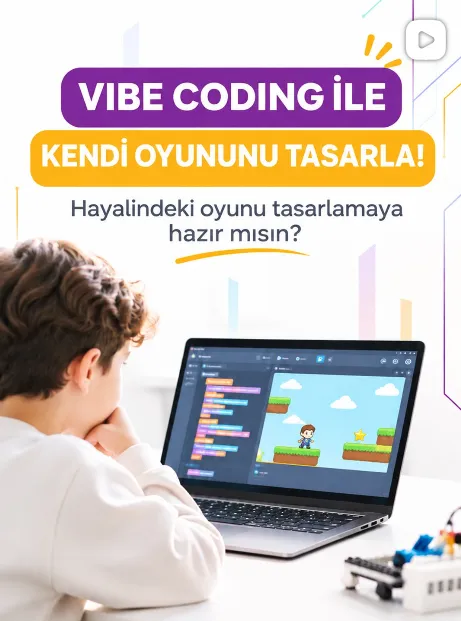
The mBlock interface makes block-based coding simple and fun, teaching students fundamental coding structures such as algorithms, loops and conditional statements. This way, students not only gain theoretical knowledge but also get to experience practical applications.
Block-based coding with Codey Rocky gives students essential and valuable skills to adapt to the information age of the future. By helping students discover their interests, this course opens up successful and exciting career opportunities in technology.
Block-based coding with Codey Rocky gives students essential and valuable skills to adapt to the information age of the future. By helping students discover their interests, this course opens up successful and exciting career opportunities in technology.
General Learning Outcomes:
- Developing programming logic and algorithmic thinking skills.
- Gaining problem-solving and analytical thinking skills.
- Developing collaboration and teamwork skills.
- Designing original projects using original and critical thinking skills.
Specific Learning Outcomes:
- Getting to know and use block-based coding platforms (Scratch, Blockly, mBlock, etc.).
- Becoming familiar with basic programming concepts (variables, loops, conditional statements, functions, etc.).
- Learning about the components and functions of the Codey Rocky robot.
- Using block-based coding to control the robot's movement, sensing and interaction capabilities.
- Designing and developing projects aimed at solving real-world problems.
- Building interactive projects using sensors and actuators on the robot.
- Sharing robotics projects with others and improving them through feedback.