
PISA's New Focus: Computational Thinking and Coding
As technology continues to advance rapidly, the education we give our students must evolve accordingly. This evolution requires including computer science in the curriculum as a core subject. The Organisation for Economic Co-operation and Development (OECD) recognises the importance of computational thinking and computer science, and plans to bring an innovative approach to the Programme for International Student Assessment (PISA), the triennial assessment that evaluates education systems worldwide by testing the skills and knowledge of 15-year-old students. In 2025, PISA will add computational thinking and block-based coding to the list of skills it assesses.
As global education systems grapple with an increasingly AI-driven world, the gap between countries that include the fundamentals of computer science in their school curricula and those that do not will widen, and this inequality will be reflected in future PISA results. The 2022 PISA Mathematics assessment included elements of computational thinking for the first time. Now, in 2025, there will be a dedicated test called "Learning in the Digital World", which will measure students' capacity to build knowledge and engage in problem-solving processes using computational tools.
The Importance of Emphasising Computer Science
Computational thinking helps students approach problems effectively and formulate solutions in ways that can be carried out by computers. Going beyond coding alone, this skill equips students with abilities such as problem solving, critical thinking and creativity, which can be applied in many different fields. Research shows that children who study computer science perform better in other subjects, are successful at problem solving and are more likely to go to university.
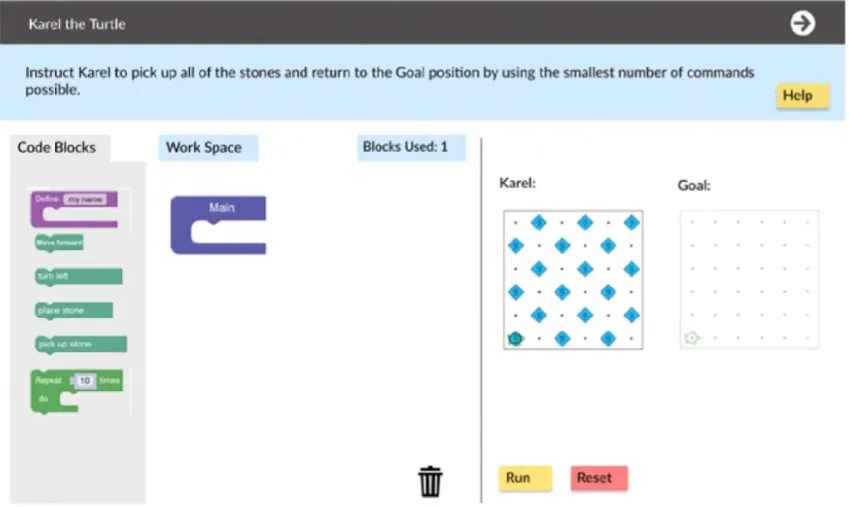
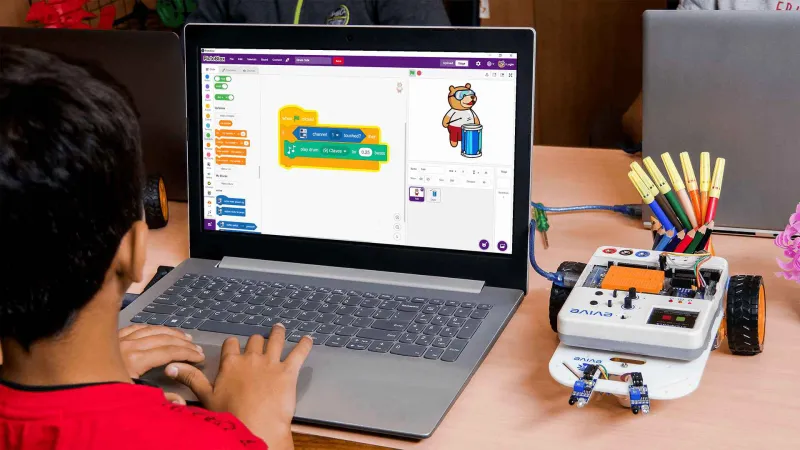
Block-based coding, meanwhile, is a beginner-friendly way to introduce students to programming. Using graphical, drag-and-drop interfaces, it allows students to create functional code with visual blocks that stack on top of each other. Students from countries that apply block-based coding to solve problems in a variety of scenarios will be better prepared when they face the PISA test.
Introducing Computer Science into the PISA Test
Sample PISA test questions involving block-based coding:
The addition of computational thinking and block-based coding to the PISA test underlines the fundamental role of computer science in education.
PISA Scores Go Beyond Reading, Mathematics and Science
In past years, PISA rankings were based largely on students' performance in reading, mathematics and science. With the addition of computational thinking and block-based coding, global education systems will be compared on how well they prepare their students for an increasingly digital world.
By 2025, countries that have made computer science a core part of their school curricula and shown that they are ready to embrace a technology-driven future, such as Estonia, South Korea and the United Arab Emirates, are poised to climb the rankings. But the real prize is equipping students with the skills they need to succeed in an increasingly digital world.
A Wake-Up Call
Code.org welcomes the inclusion of computational thinking and block-based coding in PISA assessments and hopes it will serve as a wake-up call for governments around the world: computer science in the school curriculum is no longer up for debate, it is a necessity. More than 800 businesses, educational institutions and non-profit organisations agree: computer science provides an essential foundation not only for technology careers but for every career in today's world.
PISA tests are a global benchmark of how well education systems prepare students for the real world. As the digital revolution continues to shape our world, computational thinking and coding are becoming core skills, just like reading, mathematics and science.
Every country's goal should be to give students an education that enables them to succeed in our rapidly changing world. Countries that include computer science in their curricula are taking the necessary steps to prepare their students for a bright future in the digital age.
Source: https://codeorg.medium.com/pisas-new-focus-on-computational-thinking-and-coding-fbe90e456c5f